Video
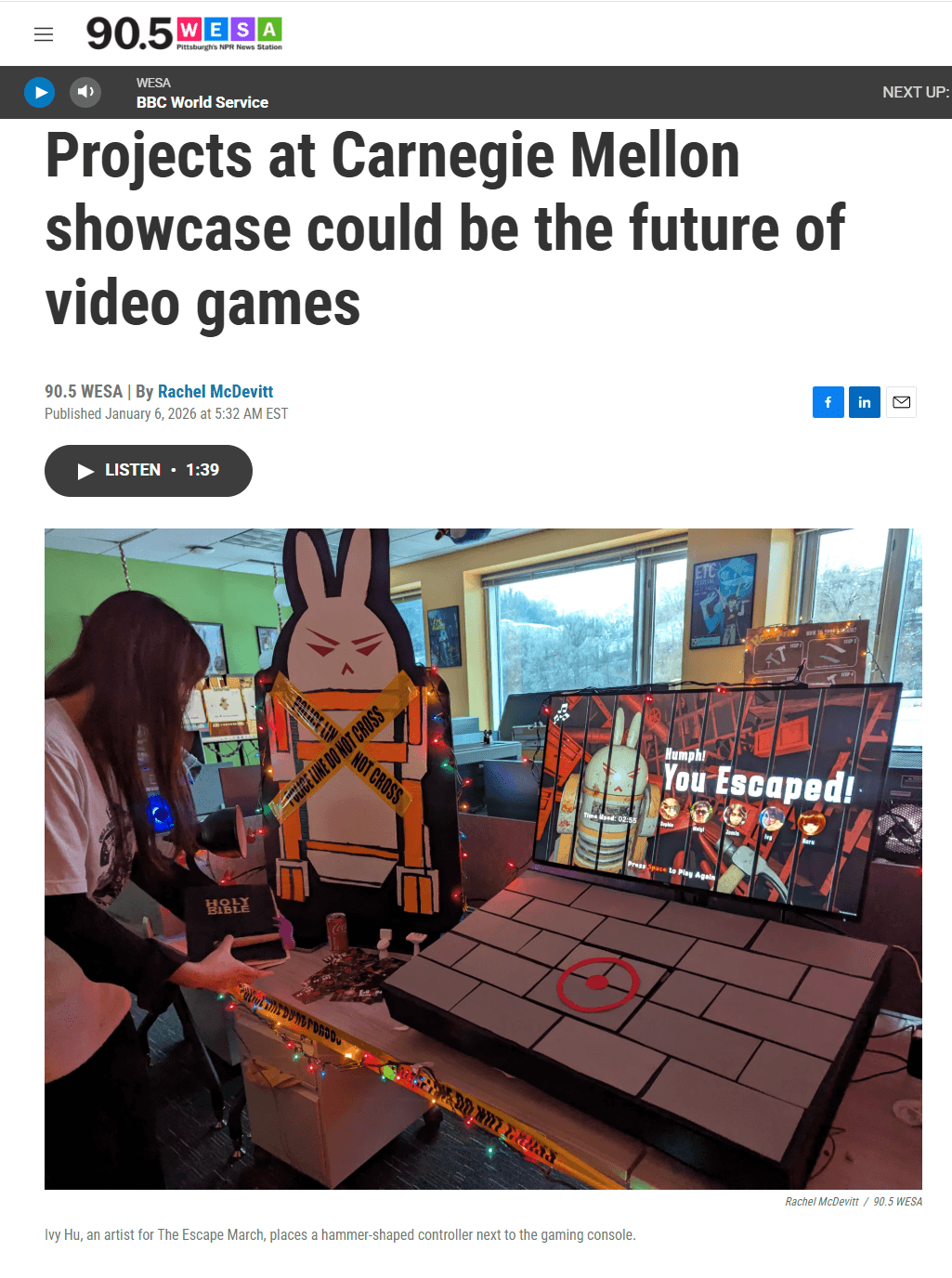
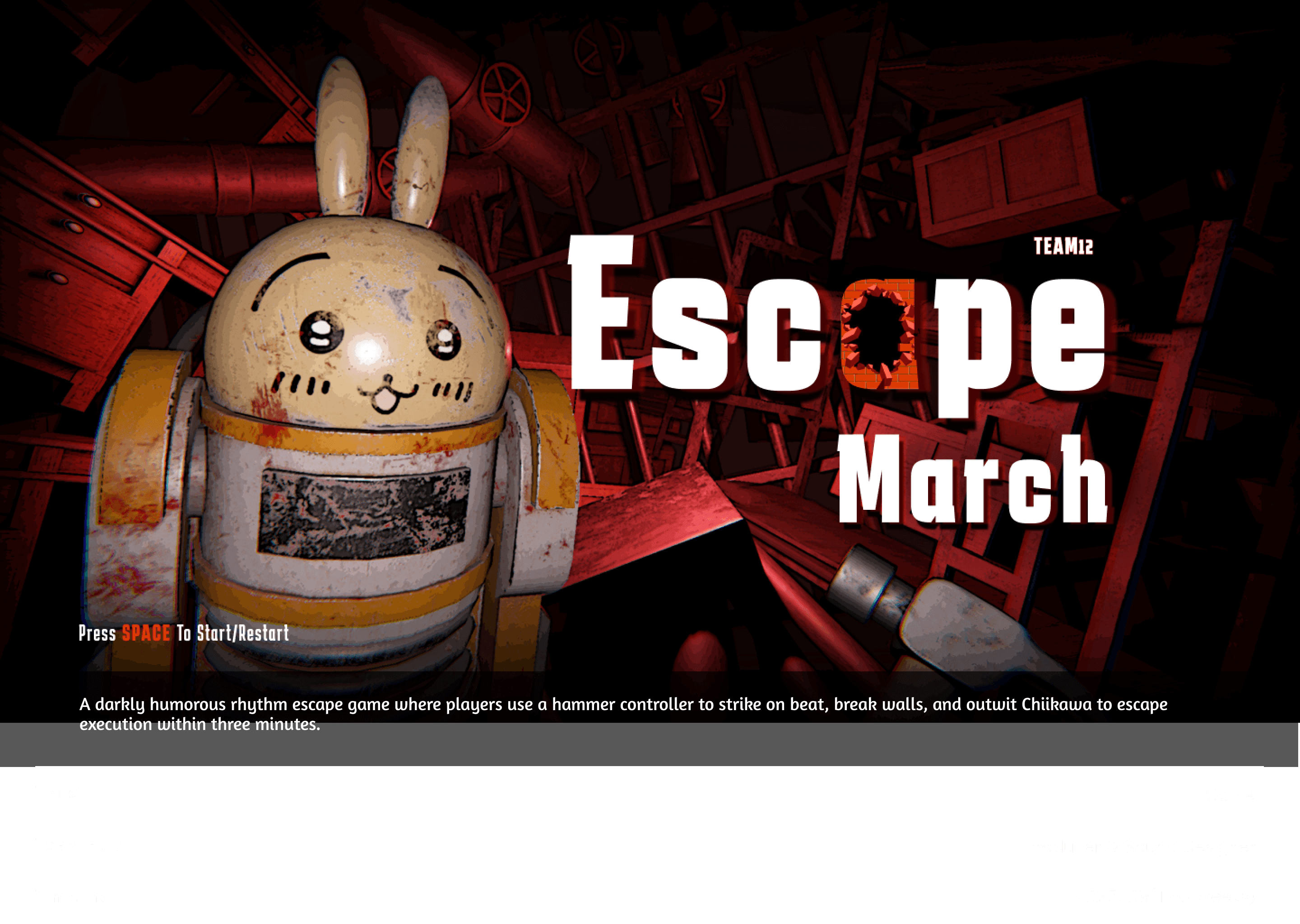
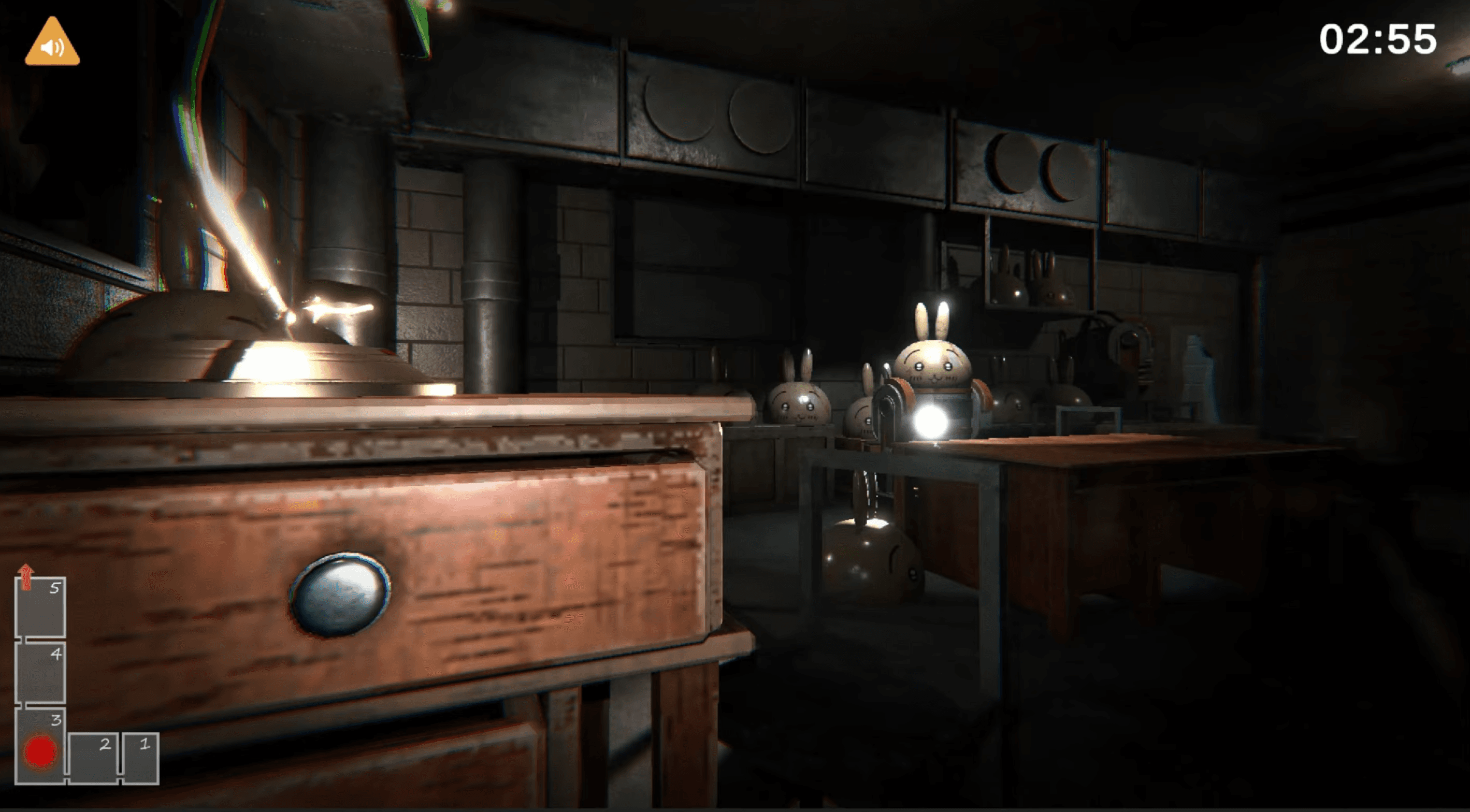
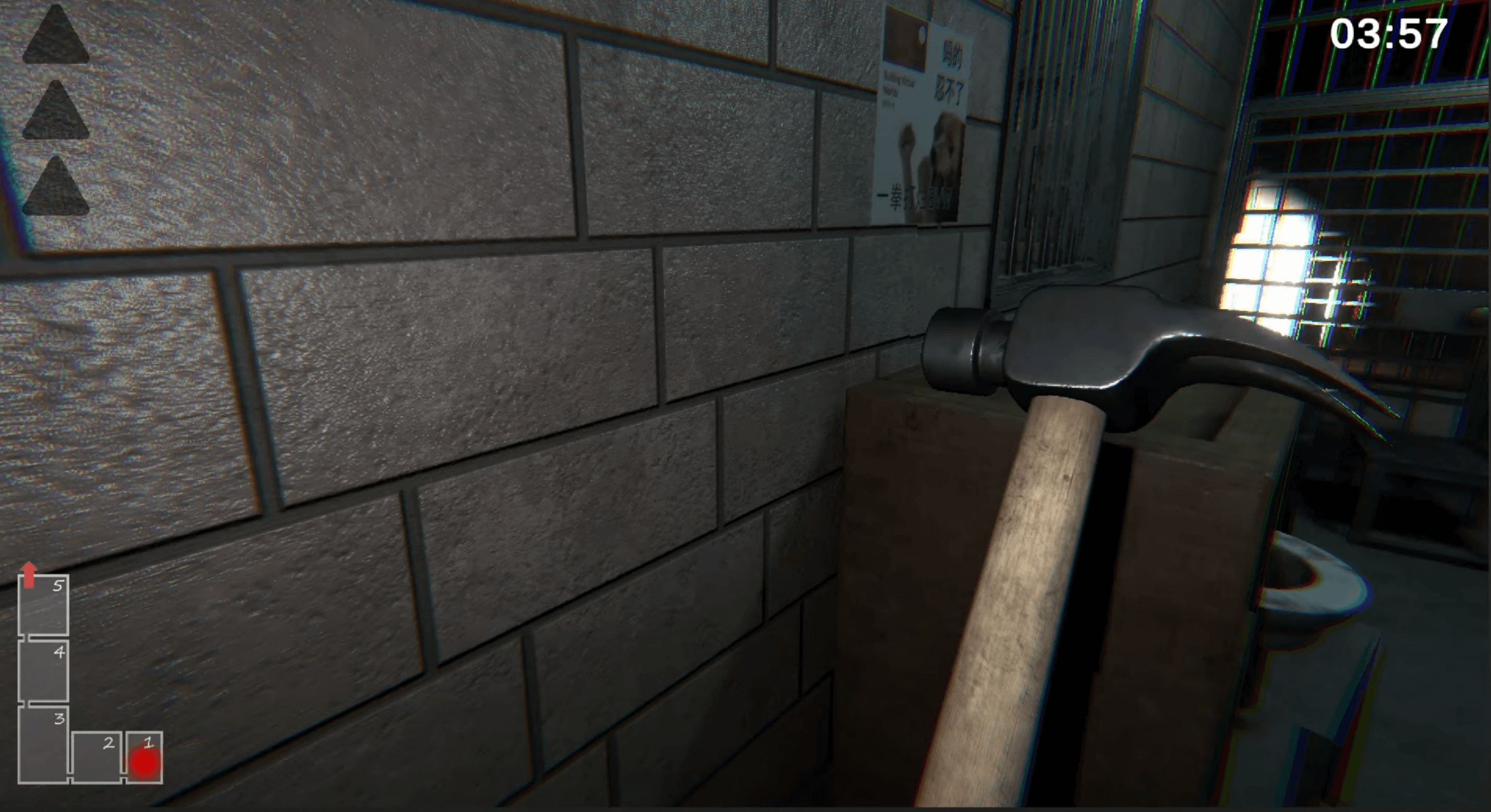
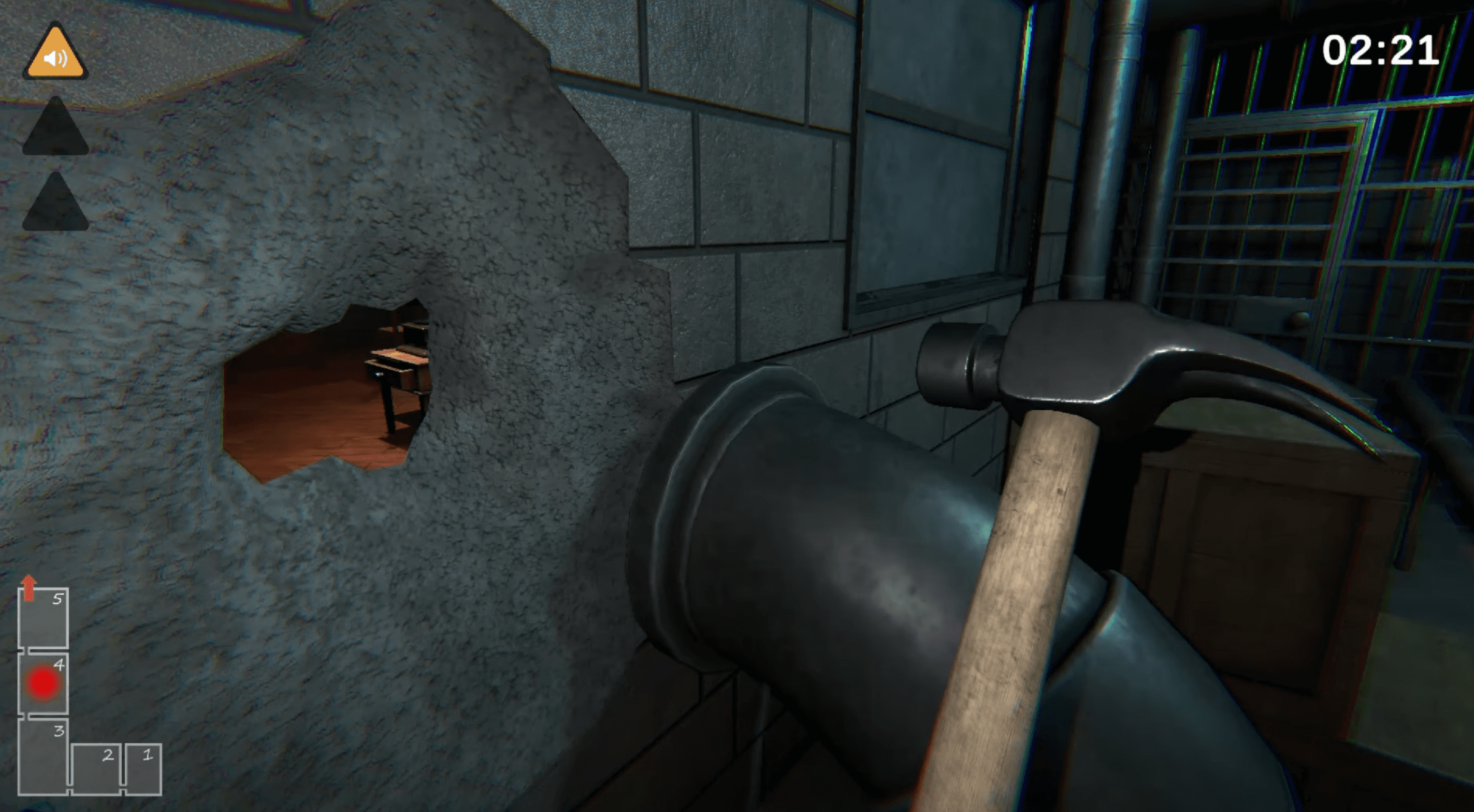
The Escape March is a rhythm-based escape game with a darkly comedic twist. Players, imprisoned for disliking Chiikawa, must use a hammer controller to strike in perfect rhythm, breaking through walls across five themed rooms. With thunder cues, absurd soundscapes, and jump scares, every beat matters—three mistakes lead to execution. Inspired by The Shawshank Redemption, the game blends tension, parody, and playful absurdity, creating an immersive escape where rhythm is survival.
The Escape March is a rhythm-based escape game with a darkly comedic twist. Players, imprisoned for disliking Chiikawa, must use a hammer controller to strike in perfect rhythm, breaking through walls across five themed rooms. With thunder cues, absurd soundscapes, and jump scares, every beat matters—three mistakes lead to execution. Inspired by The Shawshank Redemption, the game blends tension, parody, and playful absurdity, creating an immersive escape where rhythm is survival.
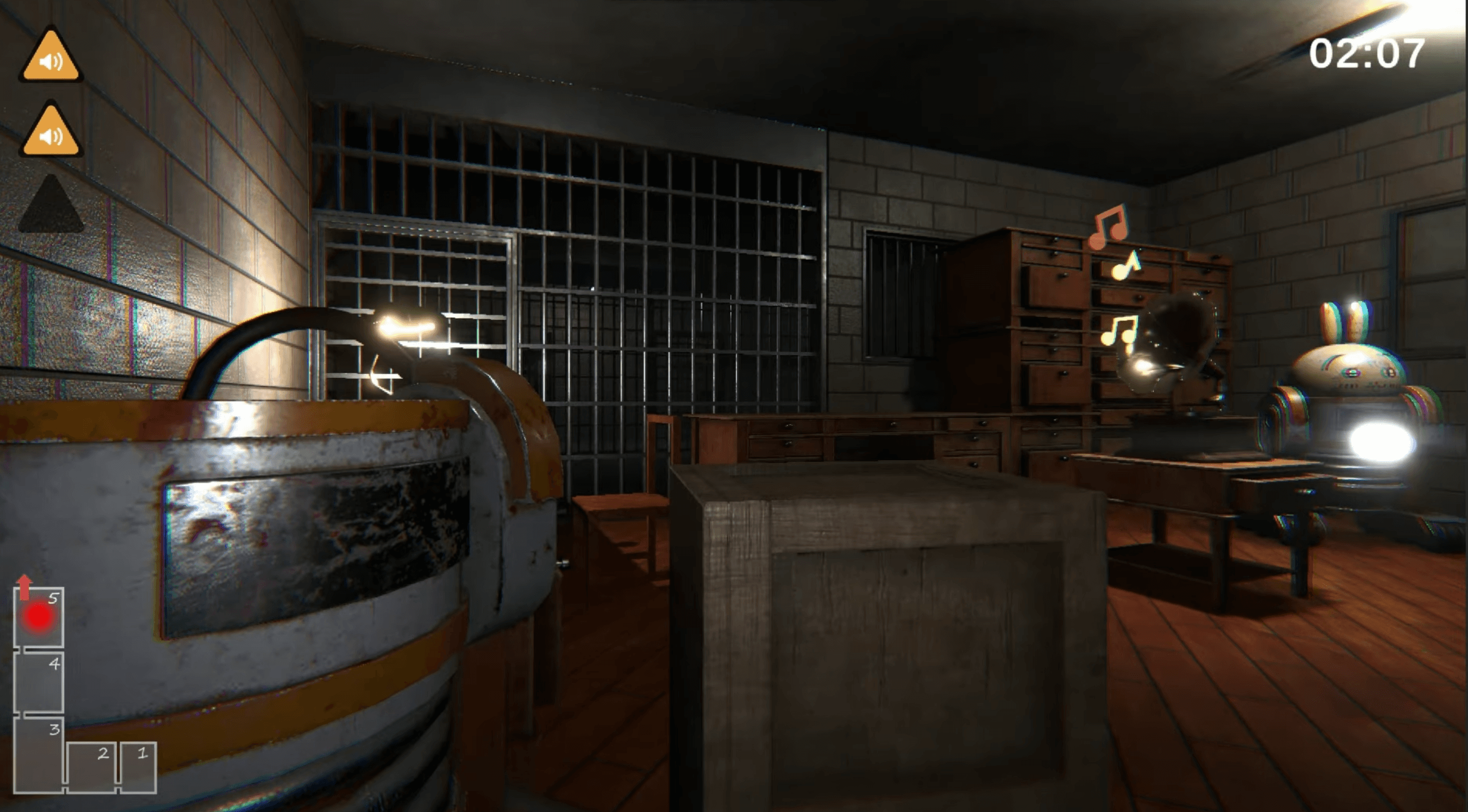
Playtest & Iteration
Playtest & Iteration
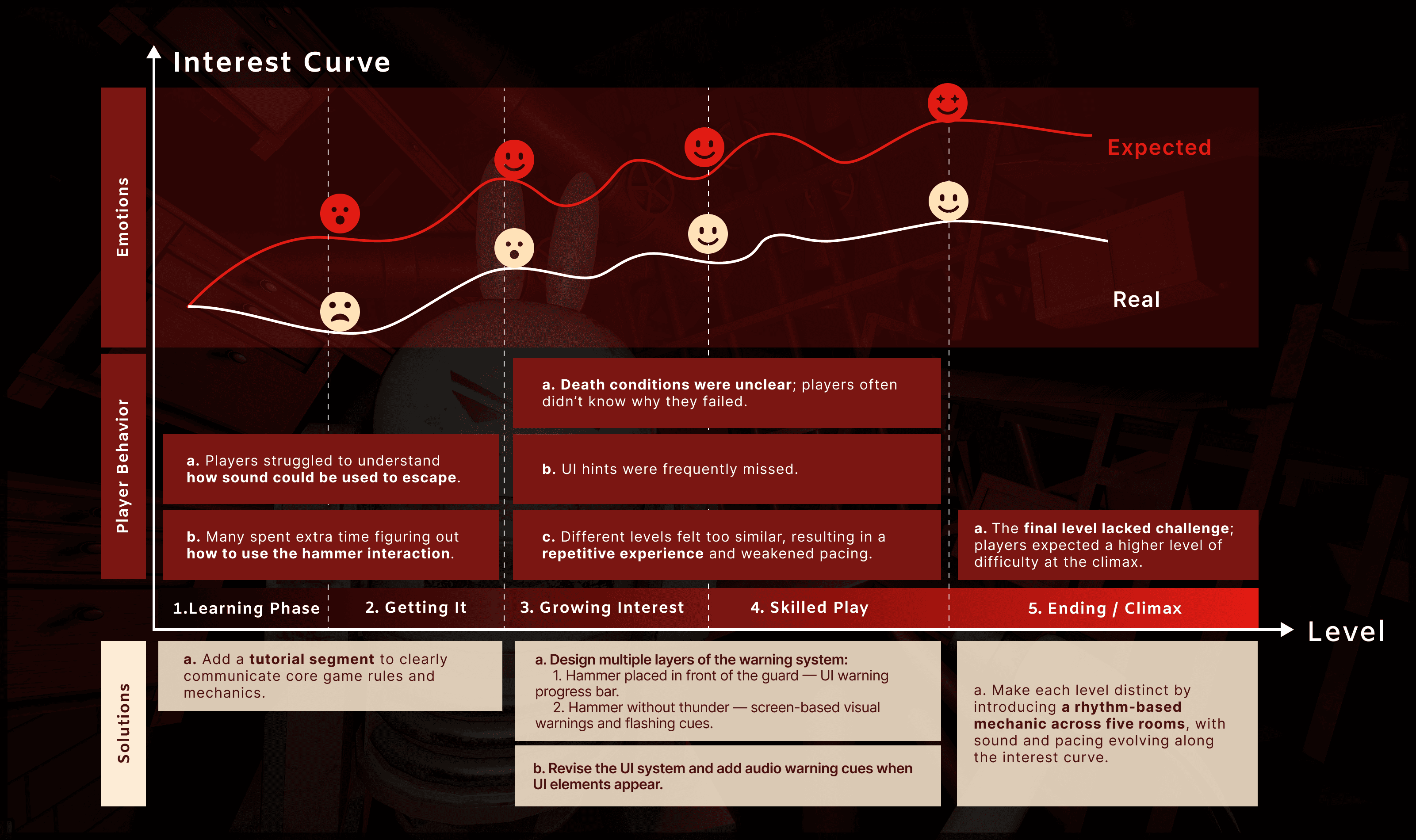
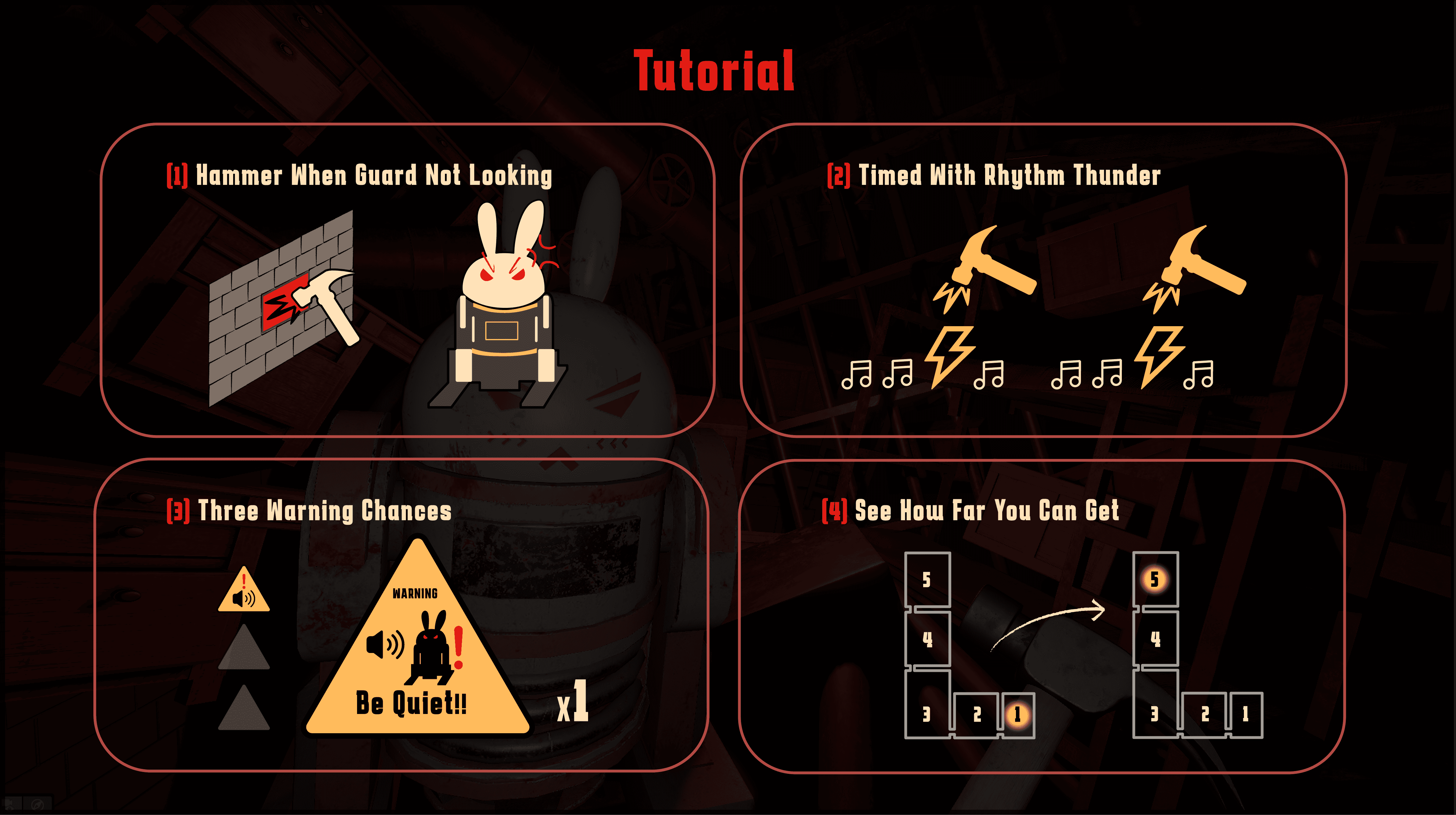
1a. Add a tutorial segment to clearly communicate core game rules and mechanics.
1a. Add a tutorial segment to clearly communicate core game rules and mechanics.
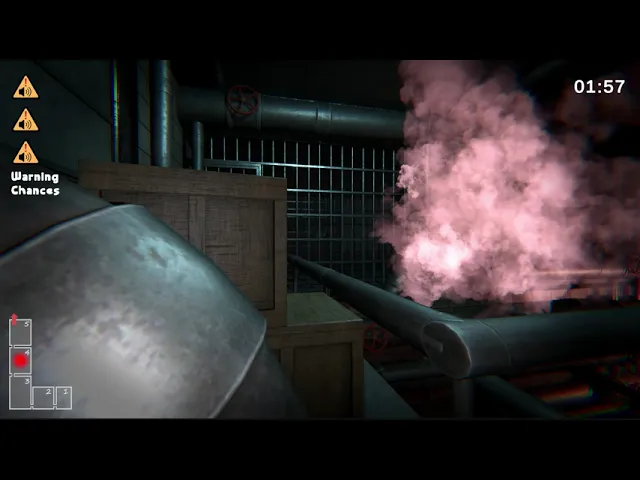
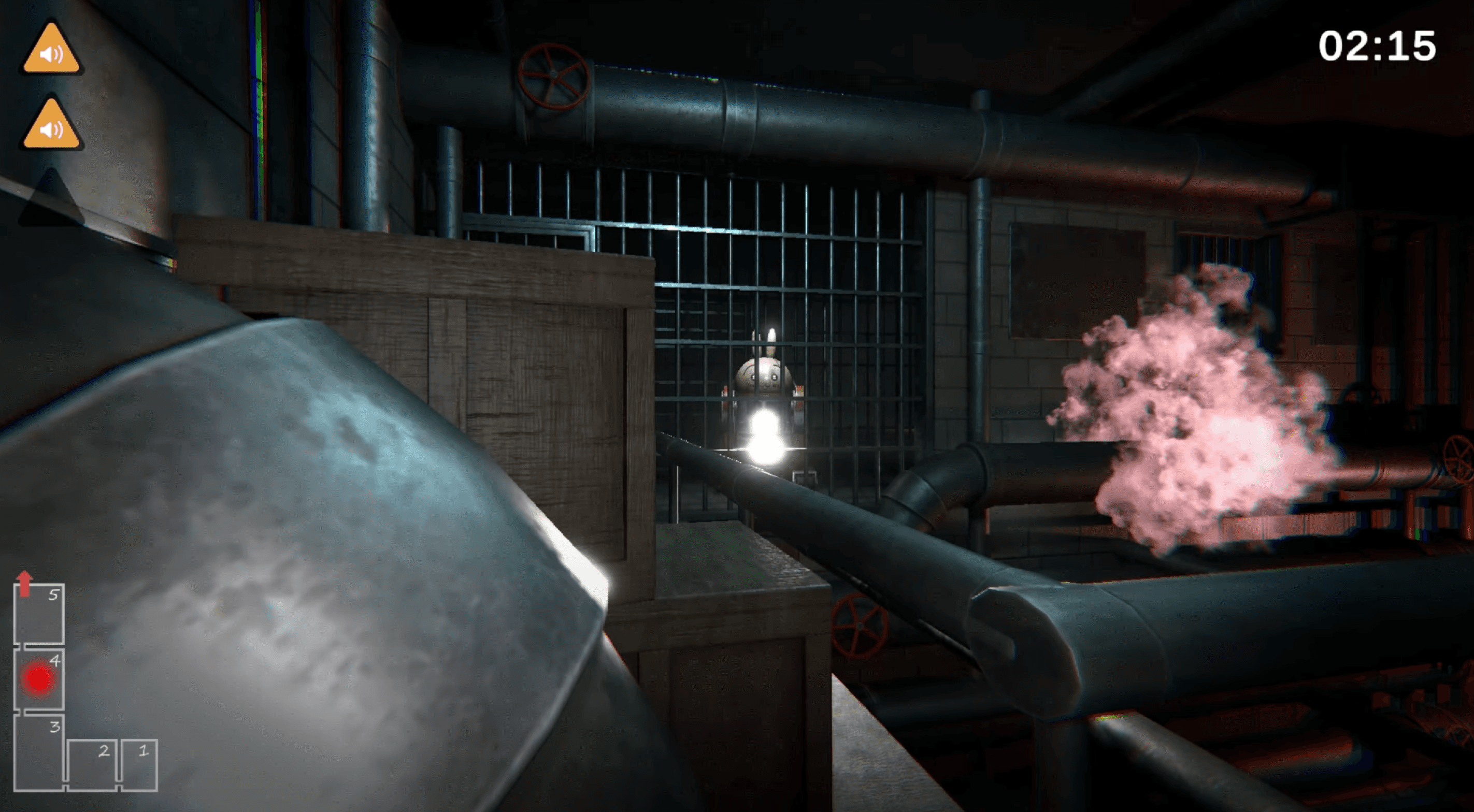
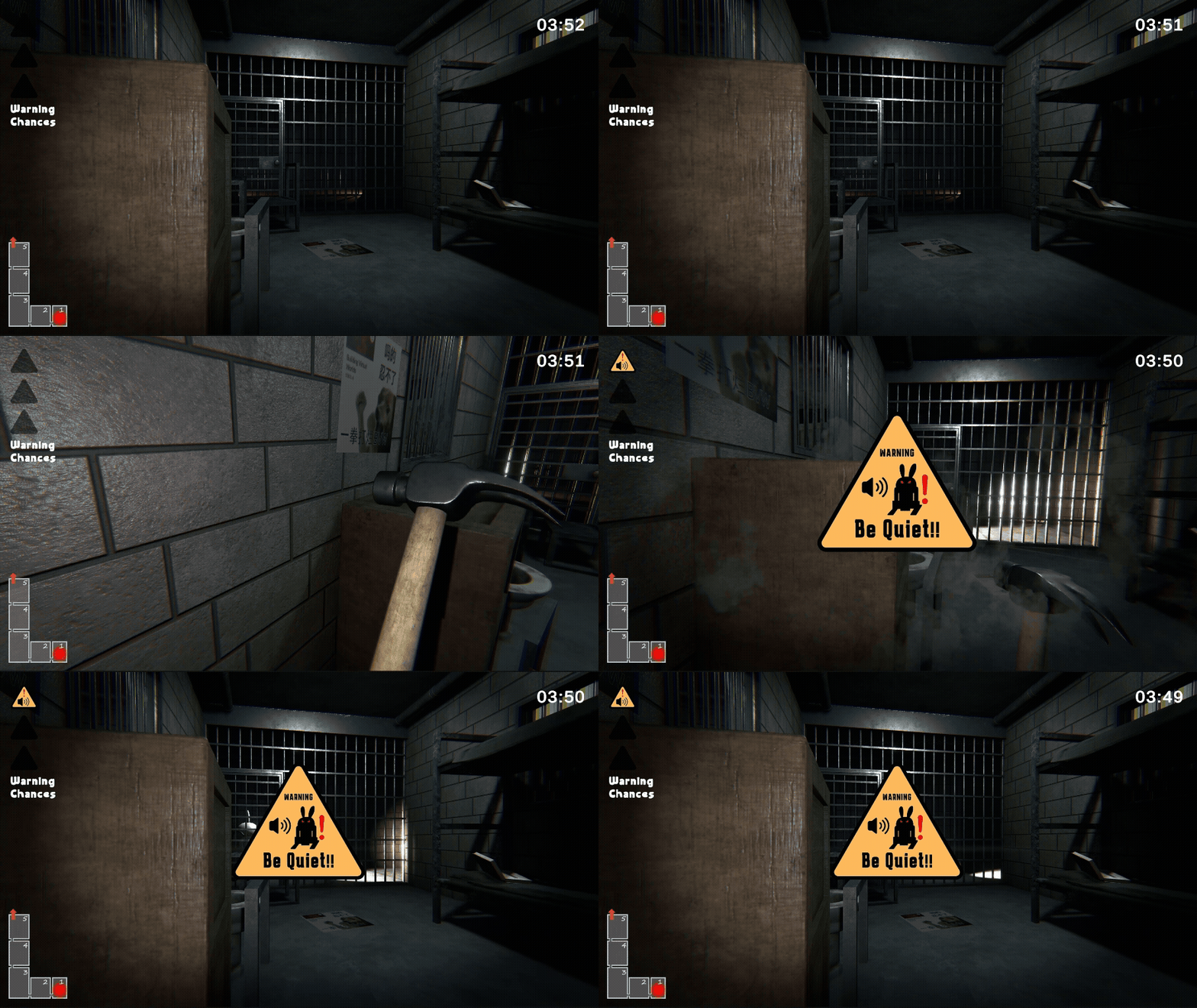
3a. Design multiple layers of the warning system:
3a. Design multiple layers of the warning system:
1. Hammer placed in front of the guard — screen-based red visual warnings and progress bar.
1. Hammer placed in front of the guard — screen-based red visual warnings and progress bar.

2. Hammer without thunder — screen-based yellow visual warnings and UI cues.
2. Hammer without thunder — screen-based yellow visual warnings and UI cues.
5a. Make each level distinct by introducing a rhythm-based mechanic across five rooms, with sound and pacing evolving along the interest curve.
5a. Make each level distinct by introducing a rhythm-based mechanic across five rooms, with sound and pacing evolving along the interest curve.